


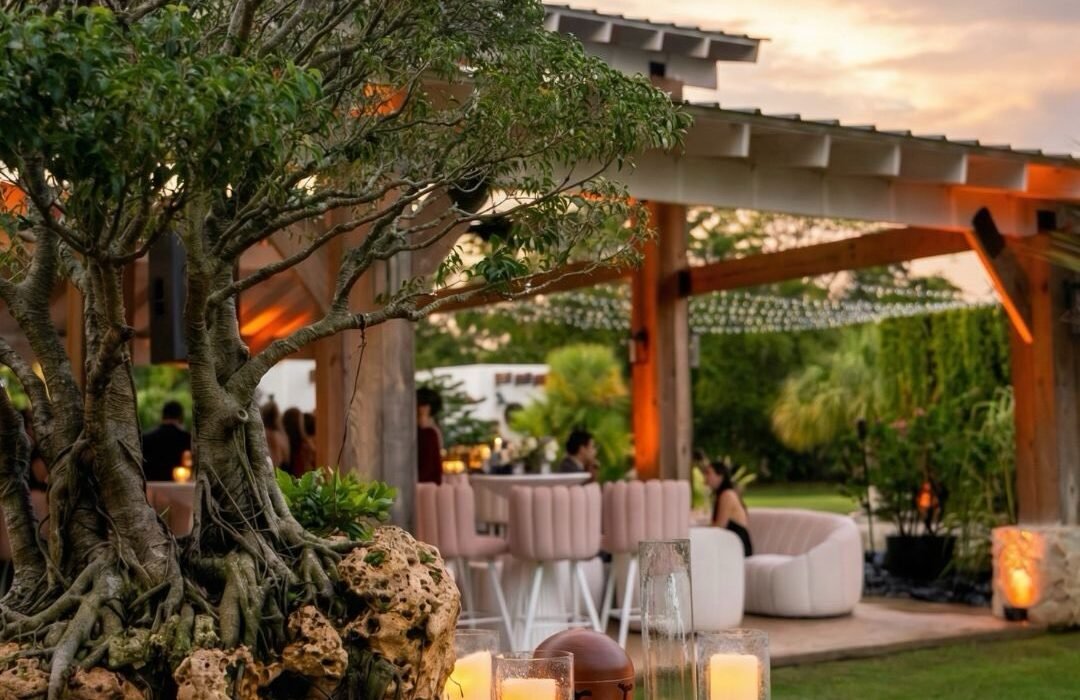
Puerto Rico makes an easy case for a corporate gathering. It offers direct air access from major U.S. cities, no passport requirement for U.S. citizens, sophisticated hotels and restaurants, and a culture and landscape that can transform a meeting into something far more memorable.
But creating a successful corporate event in Puerto Rico takes more than choosing a beautiful hotel and adding an excursion.
The programs that work best are the ones that understand the destination beyond the ballroom.
The destination should be part of the program
A corporate group can fly to Puerto Rico, meet in a conference room, have dinner at a beautiful restaurant and fly home.
Technically, they’ve been to Puerto Rico.
But have they experienced it?
For executive retreats, leadership programs and smaller corporate groups, some of the most meaningful moments happen when the destination becomes part of the conversation: sharing food with a local host, learning the rhythms and history of bomba, walking through a neighborhood with someone who understands its stories, or discovering why Puerto Rican hospitality feels distinctly different.
The goal isn’t to fill every free hour with an activity. It’s to choose experiences that have a reason for being there.
Beautiful doesn’t always mean workable
One of the realities of producing events on an island is that the most visually impressive option isn’t necessarily the best operational choice.
A venue may photograph beautifully but have limited access for motorcoaches. A beach may look perfect but require permits or have restrictions on setups. A historic location may require a different approach to accessibility, equipment or timing. An experience that’s wonderful for 12 guests may simply not translate for 80.
These aren’t reasons to avoid those experiences.
They’re reasons to ask the right questions before promising them to a client.
That’s where local destination support becomes particularly valuable. Knowing what’s possible is important. Knowing what is realistically executable is even more so.
Group size changes everything
Puerto Rico can work beautifully for both intimate executive retreats and larger corporate programs, but they shouldn’t be designed the same way.
With a group of 15 or 20, you can often access places, tables and experiences that simply aren’t available to 100 people.
Larger groups require a different kind of creativity.
Instead of trying to force 100 guests into an experience designed for 20, the better question is:
How do we preserve the authenticity of the experience while designing it for the group we actually have?
Sometimes that means bringing artists, makers or culinary partners to the group. Sometimes it means dividing guests into smaller rotations. Sometimes it means choosing an entirely different location.
Scale should influence the design—not dilute it.
Puerto Rico doesn’t end at San Juan
San Juan is extraordinary, and for many programs it should absolutely be part of the experience.
But San Juan is not Puerto Rico.
Within a relatively small geographic area, the island offers mountains, coastal communities, working farms, rainforests, historic towns, culinary traditions and communities with their own identities.
For corporate groups, going beyond the expected can completely change the tone of a program.
That doesn’t mean driving across the island simply to say you did it. Travel time, traffic, group energy and the day’s overall objective matter.
Sometimes the right answer is an immersive experience five minutes from the hotel. Sometimes it’s worth traveling an hour.
Good program design knows the difference.
Culture shouldn’t feel like entertainment added at the end
There is an important distinction between showing Puerto Rican culture and allowing guests to engage with it.
Bomba, for example, can certainly be presented as a performance. But understanding its history, the relationship between dancer and drummer, and the communication taking place within the music creates an entirely different experience.
The same applies to food, coffee, rum, art and dance.
For corporate and leadership groups in particular, cultural experiences can create natural conversations around communication, trust, following and leading, adaptability and collaboration—without turning the destination into a classroom exercise.
The culture remains the culture.
The learning comes from experiencing it.
The invisible work matters
Guests rarely see the phone calls, site inspections, permit questions, transportation adjustments, weather checks, vendor confirmations or backup plans behind an event.
They shouldn’t.
The experience guests remember is often the part that never felt complicated.
For the planner, however, that invisible layer is everything.
Having someone on the ground who knows the destination, understands hospitality operations and can recognize potential problems before they become guest-facing problems can make an enormous difference—particularly when the planner is coordinating the rest of the program from hundreds or thousands of miles away.
DMC or destination support?
Not every corporate program needs a large traditional DMC structure.
Some planners already have the hotel, meeting space and much of their program established. What they need is a trusted local partner who can help develop an experience, source the right partners, manage a specific program component or simply be present on the ground when the group arrives.
Other programs require much more comprehensive coordination.
The right model depends on the group.
At B Lux PR, we describe our role as destination support: working alongside meeting professionals, executive teams, travel advisors and hospitality partners to help translate an idea into something that works here, in Puerto Rico.
Sometimes that means designing the experience.
Sometimes it means producing it.
And sometimes the greatest value is simply knowing who to call, what to ask and what to anticipate.
Beyond the ballroom
Puerto Rico already provides the setting.
The opportunity is to create a corporate program that couldn’t simply be picked up and reproduced in another destination.
Because ultimately, a successful corporate event in Puerto Rico shouldn’t just happen in Puerto Rico.
It should feel distinctly Puerto Rican.
Distinctly Puerto Rico. Perfectly Executed.
2 Comments